Why Professional Pruning Matters for Tree Health
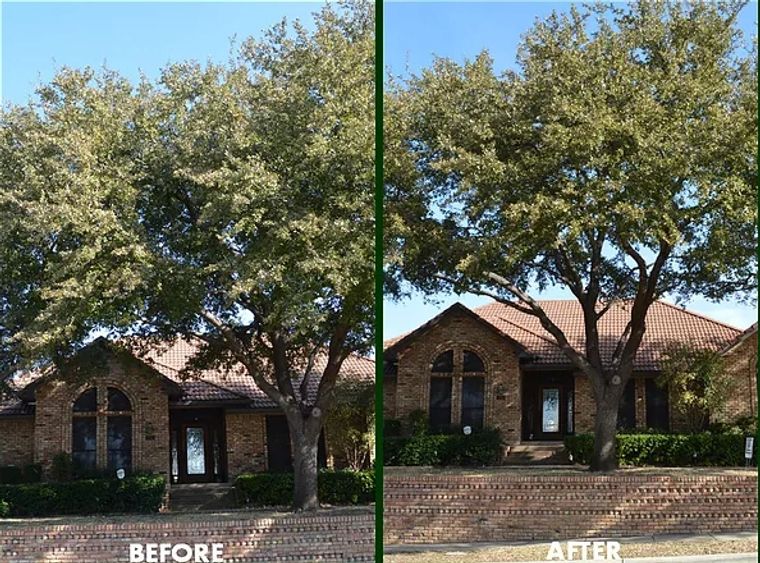
Pruning is one of the most important maintenance practices for keeping trees healthy, safe, and aesthetically pleasing. Yet it is also one of the most commonly misunderstood aspects of tree care. Many DFW homeowners attempt to prune their own trees or hire general landscaping crews who lack specialized training, and the results can be devastating. Improper cuts can introduce disease, weaken the tree's structure, and lead to costly problems down the road. Understanding why professional pruning matters is the first step toward protecting your investment in your landscape.
The Problem with Topping and Over-Pruning
One of the most damaging practices we see throughout the Dallas-Fort Worth area is tree topping -- the indiscriminate cutting of branches back to stubs or lateral branches too small to assume the lead role. Topping is often sold as a way to reduce a tree's height or "let more light through," but it is universally condemned by arboricultural professionals. When a tree is topped, it responds by producing a dense cluster of weakly attached sprouts called watersprouts. These new shoots grow rapidly but are attached only to the outer layer of the stub, making them far more likely to break during the severe thunderstorms and high winds common in North Texas. Topping also removes a massive portion of the tree's leaf-bearing crown, essentially starving it and triggering a stress response that makes it more vulnerable to disease and insect attack.
Proper Pruning Techniques Promote Long-Term Health
A certified arborist understands the biology behind every cut. Professional pruning follows established standards set by the International Society of Arboriculture and ANSI A300 guidelines. Each cut is made at the correct location relative to the branch collar -- the swollen area where the branch meets the trunk -- allowing the tree to compartmentalize the wound and seal it with new growth. Strategic thinning removes selected interior branches to improve air circulation and light penetration without stripping the canopy. Crown raising removes lower limbs to provide clearance for structures, vehicles, and pedestrians. Crown reduction, when necessary, reduces the tree's height by cutting back to appropriately sized lateral branches, preserving the tree's natural form. These techniques, performed correctly, keep the tree structurally sound for decades.
Timing Matters in North Texas
When you prune is nearly as important as how you prune, and the best timing varies by species. In the DFW area, oak trees should never be pruned between February and June due to the risk of oak wilt transmission. The fungal pathogen that causes oak wilt is carried by nitidulid beetles that are most active during the warm months, and fresh pruning wounds serve as entry points. For most deciduous species, late winter dormant pruning (December through early February) is ideal because the tree's structure is clearly visible, wound closure begins quickly in spring, and disease pressure is lowest. However, dead or hazardous limbs should be removed immediately regardless of the season. A professional arborist knows these species-specific timing requirements and will plan the work accordingly.
Protecting Your Property Value
Mature trees are among the most valuable features of any DFW property. Studies consistently show that well-maintained trees can add 10 to 15 percent to a home's resale value. Conversely, trees that have been improperly pruned -- with stubs, flush cuts, lion-tailing, or topping damage -- detract from curb appeal and may raise concerns during a buyer's inspection. Regular professional pruning maintains a tree's natural shape, keeps it in proportion with your home and landscape, and ensures it remains an asset rather than a liability. For commercial properties, proper tree maintenance also reduces the risk of slip-and-fall claims from falling limbs and demonstrates due diligence in property management.
What to Look for in a Pruning Professional
Not all tree companies are created equal. When hiring someone to prune your trees, look for an ISA Certified Arborist on staff, proof of liability insurance and workers' compensation coverage, and a willingness to provide a written scope of work before starting. Be cautious of anyone who suggests topping your trees, quotes a price without inspecting the trees in person, or uses climbing spikes on living trees (spikes wound the trunk and should only be used during removals). A reputable company will explain what they plan to do and why, and the results should leave your trees looking natural and well-balanced.
Need Professional Pruning?
Our trained arborists provide expert pruning throughout the DFW Metroplex.
Get a Free Estimate